

Tariffs, Trade Wars & the Solar Realignment: Why Africa Must Play Offense
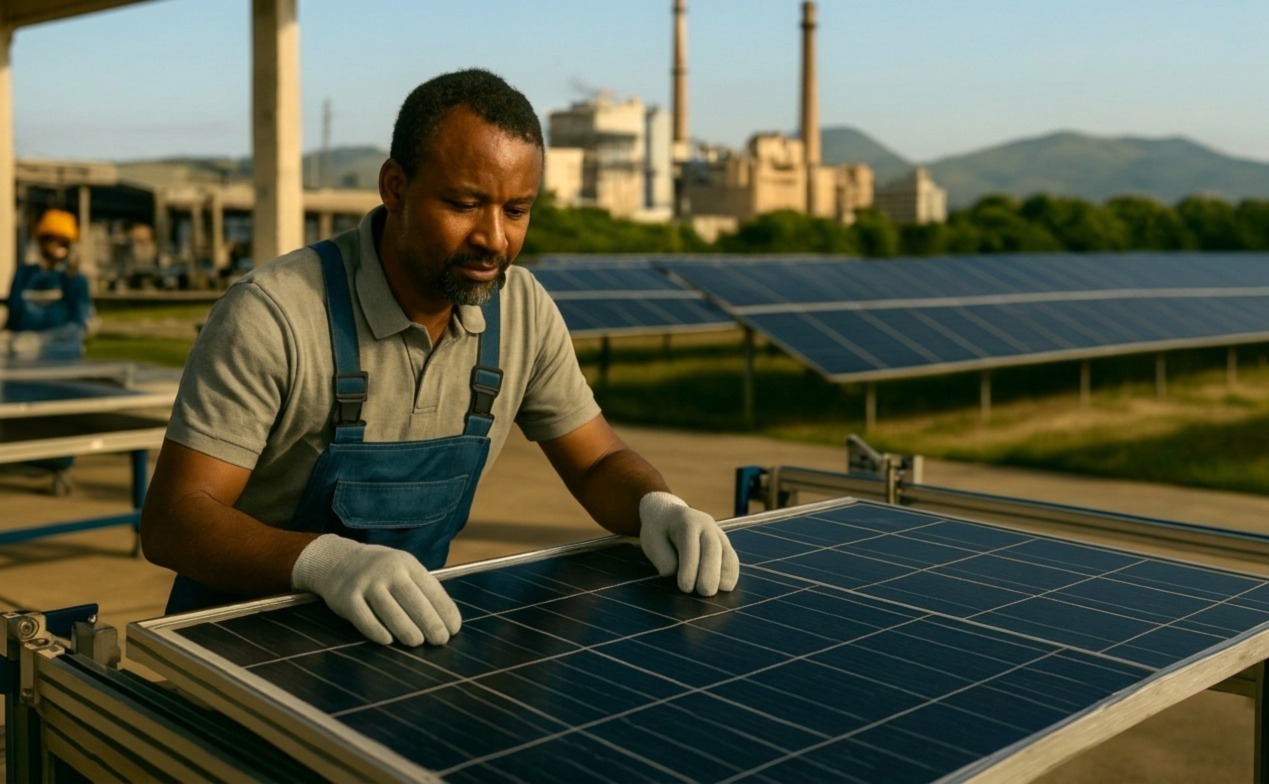
As global supply chains fracture, African countries have a narrow window to localise solar manufacturing and build resilience into their
energy systems. Last week, I reflected on Nigeria's proposed solar import ban - and the risks of moving without a clear industrial strategy. This week, the
global context has sharpened.
The U.S. has raised tariffs on a wide range of Chinese imports - including solar panels, inverters, and battery storage systems - to 145%. China has responded with 125% tariffs on U.S. goods, alongside new export restrictions. The European Union has delayed its countermeasures for 90 days. Southeast Asian exporters remain under a temporary reprieve.
But behind the headlines is a more structural shift: The global map for solar production and energy infrastructure is being redrawn.
Countries are moving quickly to secure domestic capacity, anchor value chains, and build resilience. African governments and investors must
now consider how and where to position themselves. A Moment of Pressure and of Possibility Across the continent, solar remains central to closing energy access gaps.
But most countries still rely heavily on imported components to deliver it. As supply chains come under pressure, this model becomes
more expensive, more uncertain and more vulnerable. But disruption can also bring opportunity.
Manufacturers affected by today’s trade volatility are seeking new production bases. With the right policy environment, Africa could offer a
neutral, investment-ready platform for solar manufacturing - not just anend market, but a contributor to global supply.
A Continent Preparing and Competing Several African countries are already moving with intent:
â— Egypt is scaling green industrial zones with targeted incentives.
â— Morocco is aligning solar and manufacturing ambitions with
Europe.
â— South Africa and Kenya are embedding localisation into procurement.
These aren’t just policy statements. They’re industrial strategies designed to attract global capital and anchor long-term value. For Nigeria and others, the challenge is not catching up; it's matching intent with execution.
Nigeria’s Inflection Point
Nigeria has the scale, demand, and visibility to lead. But leadership requires more than signals. The proposed import ban reflects urgency—but must be backed by a coherent, investable strategy:
1. Phased localisation targets, starting with assembly.
2. Fit-for-purpose infrastructure in solar-focused industrial zones.
3. Investment incentives tied to exports and jobs.
4. DFI-backed blended finance to de-risk capital.
5. A skilled workforce pipeline, embedded from the start.
Without these, the ban risks slowing deployment—and missing the moment.
From Energy Access to Industrial Strategy
Over 600 million Africans still lack reliable electricity. Solar is one of the most scalable and relevant solutions. But importing everything isn’t
sustainable or strategic. Local solar manufacturing offers more than power. It offers resilience, jobs, FX savings, and long-term control. This is where climate ambition meets industrial transformation.
A Call for Strategic Coordination
This isn’t a time for panic—but it is a time for precision. African countries—including Nigeria—can move now to turn global
volatility into regional advantage. That means alignment across industrial, trade, and energy strategies, and true partnership with
manufacturers navigating their own realignments. The opportunity is real. The window is narrow. The decisions we make next will define our place in the energy economy for decades to come.
More headlines

Nigeria’s clean energy future is no longer a promise - it’s being built, right here, by Nigerians.
Mente Energy joined innovators, industry leaders and policymakers at the first Nigerian Renewable...
Read More