From Deployment to Domestic Value: Why Nigeria's Renewable
Energy Moment Must Become an Industrial One Nigeria has made meaningful progress in deploying renewable energy at
scale over the past decade. Millions of households and businesses now rely on decentralised solutions that simply did not exist a generation ago.
But deployment alone is not the destination.
The real opportunity now is to convert this scale into durable domestic value: jobs, skills, industrial capability and long-term investment
confidence. That is the transition Nigeria must make if renewable energy is to serve not just access goals but broader economic ones.
This is where the conversation needs to mature.
Too often, localisation debates start with what we want to manufacture rather than what demand actually exists, how predictable it is and
whether it can support serious investment. Without credible demand visibility, localisation remains aspirational.
What changes the equation is anchor demand. Institutions like the Rural Electrification Agency have built delivery
pipelines of national significance. When structured properly, that demand can do more than deliver power. It can send long-term signals to
manufacturers, suppliers and investors about where Nigeria is going and at what scale.
The challenge and the opportunity is to move from fragmented deployment to coherent market shaping.
That means asking harder questions:
â— How do we translate deployment pipelines into investment-grade demand?
â— How do we distinguish between what can realistically be localised now versus later?
â— How do we ensure Nigeria First ambitions are grounded in delivery realities not slogans?
â— How do we crowd in institutional capital without over-relying on guarantees?
These are not academic questions. They are practical ones and they matter because the decisions taken now will shape Nigeria’s energy and
industrial landscape for the next 20 years.
The next phase of Nigeria’s renewable energy journey is not just about more projects. It is about better market design, clearer demand signals
and credible pathways from deployment to industry. If we get that right, renewable energy becomes more than an access
solution. It becomes an engine for industrial growth, investment confidence and long-term economic resilience.
That is the real prize.
More headlines


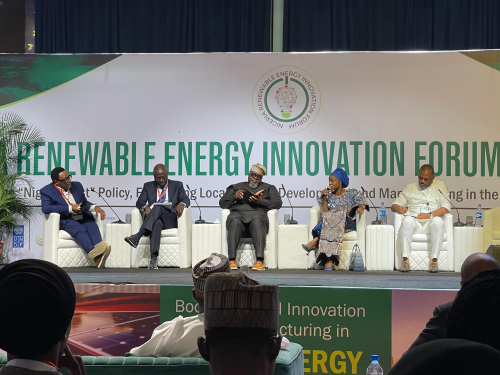
Nigeria’s clean energy future is no longer a promise - it’s being built, right here, by Nigerians.
Mente Energy joined innovators, industry leaders and policymakers at the first Nigerian Renewable...
Read More